

For individuals who spend their working hours navigating software code, system architectures, or advanced digital interfaces, leisure time is rarely about shutting down the brain. Instead, the modern tech-minded professional looks for recreation that matches their intellectual curiosity—activities that can be optimized, customized, and engineered for peak performance. The passive, one-size-fits-all hobbies of the past are rapidly giving way to “tech-enabled adventure gear” and highly personalized, DIY recreational setups.
True recreation for a technical mind involves breaking down a hobby into its core components, modifying the variables, and building a bespoke experience from the ground up. Whether hacking the open-source firmware on an electric vehicle, building a rugged, off-grid mobile command center, or engineering a high-speed aquatic transport, customization is the ultimate force multiplier for personal enjoyment. This in-depth guide explores how tech enthusiasts can systematically modify their recreational pursuits across mechanical, electrical, and structural domains to create the ultimate personalized leisure ecosystem.
Engineering Next-Generation Overland and Off-Grid Vehicles

For many tech professionals, the ultimate customization project begins with a vehicle capable of reaching remote areas without disconnecting from digital frameworks. Turning a standard consumer truck or SUV into a smart overland rig requires looking past superficial aesthetics and focusing on high-level mechanical utility. Upgrading the suspension geometry and adding heavy-duty structural bumpers are essential, but the real magic happens when you integrate custom-tailored local truck accessories that optimize storage and cargo management.
To maximize the internal volume and weatherproofing of an overland build, adding premium camper shells provides a secure, climate-controlled enclosure for delicate computing gear, star-linked satellite receivers, and field electronics. These advanced enclosures serve as a blank canvas for structural engineering, allowing you to route auxiliary wiring channels and mount modular racking systems.
- Install heavy-duty, locking slider trays within the vehicle bed to provide effortless, slide-out access to heavy auxiliary battery banks and field servers.
- Incorporate weather-sealed utility seals along the bed rails to run internal communication cables from the primary cabin directly to rooftop antenna mounts.
- Select lightweight composite or marine-grade aluminum enclosures to minimize dead weight and preserve the vehicle’s original center of gravity.
- Integrate proximity-based LED utility lighting circuits within the rear hatch that sync directly with your primary smart-home automation applications.
Once the structural shell is stabilized, mechanical connectivity becomes the next point of optimization. Installing a robust, frame-mounted hitch for towing unlocks the ability to transport heavy secondary tech gear, mobile workshops, or extreme marine equipment into the field. This mechanical link must be treated as a critical safety component, requiring exact torque specifications and proper wiring harness integration to support smart trailer-braking controllers and real-time tongue-weight sensors. By seamlessly pairing rugged local truck accessories with smart camper shells and a heavy-duty hitch for towing, tech-minded adventurers can successfully transform a basic commuter truck into a fully personalized, autonomous basecamp capable of sustained off-grid operations.
Managing Off-Grid Power Systems and Solar Microgrids

A truly optimized mobile basecamp or remote recreational workshop is only as reliable as the electrical network that powers it. Tech enthusiasts naturally recoil at the noise, emissions, and mechanical unreliability of traditional fossil-fuel generators, opting instead to design closed-loop, silent renewable energy microgrids. For a custom overland rig, a remote cabin, or a mobile maker-space, deploying advanced solar electricity services is the gold standard for achieving true energy independence.
Designing these systems involves calculating total watt-hour demands, mapping peak solar insolation windows, and programming smart charge controllers to protect high-capacity Lithium Iron Phosphate ($LiFePO_4$) battery banks. Modern off-grid setups utilize programmable, Bluetooth-enabled maximum power point tracking (MPPT) regulators that allow you to monitor energy capture efficiencies down to the individual millivolt from a mobile dashboard or a custom Python script.
- Specify high-efficiency, marine-grade monocrystalline solar panels featuring bypass diodes to maintain power generation even during partial shading from forest canopies.
- Integrate smart shunt monitors directly into the negative battery terminal to track real-time state-of-charge, power draw, and remaining runtime metrics.
- Utilize pure sine wave power inverters to guarantee clean, harmonic-distortion-free alternating current ($AC$) electricity for sensitive laptops, diagnostic tools, and 3D printers.
- Program automated low-voltage disconnect limits within your battery management system to prevent accidental over-discharge cycles during extended periods of overcast weather.
By leveraging expert solar electricity services, recreationists can safely run high-draw devices—such as induction cooktops, star-linked satellite systems, and climate-control fans—indefinitely without ever starting an engine. This clean, silent electrical foundation allows tech-minded people to merge the raw beauty of natural environments with the uncompromised processing power of a modern data center, unlocking a new frontier of remote work and high-tech wilderness exploration.
Hacking High-Speed Hydrofoils and Aquatic Telemetry
When tech-minded individuals look to the water for recreation, standard jet skis or kayaks rarely satisfy the craving for fluid optimization and high-efficiency engineering. Instead, the intersection of fluid dynamics and electric propulsion has birthed an elite category of personal watercraft: the electric hydrofoil board, or eFoil. These advanced marine vessels utilize an electric motor mounted to an underwater mast and airplane-like wings (foils) to lift the rider entirely out of the water, eliminating hull drag and creating a sensation of silent, low-friction flight.
The true appeal of an electric hydrofoil board for tech enthusiasts lies in its rich telemetry data and customizable performance profiles. Modern eFoils feature integrated computer modules that track battery cell temperatures, motor RPM, torque curves, and real-time GPS speed, streaming this data directly to handheld controllers via wireless protocols. Riders can customize the ESC (Electronic Speed Controller) firmware to adjust acceleration ramp speeds, torque delivery, and power-saving cutoffs to perfectly match their weight, riding style, and local water conditions.
Optimizing an eFoil setup involves treating the watercraft as a modular hardware platform. Riders can swap out the underwater carbon-fiber wings to alter the lift coefficient and drag profiles, choosing wider, high-aspect wings for long-distance, low-speed cruising, or smaller, aggressive wings for high-velocity carving. This continuous cycle of mechanical adjustments, electronic data analysis, and firmware tuning turns a simple day on the water into an engaging, real-world physics experiment that challenges and satisfies the analytical mind.
Mastering Mechanical Fabrication and Automated Sorting Systems
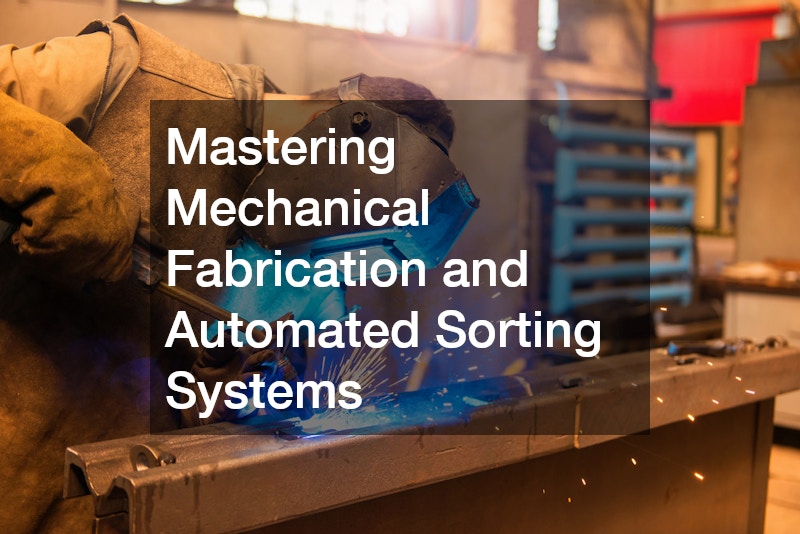
For many technical minds, true relaxation is found in the physical act of creation—building custom brackets, machining bespoke parts, or fabricating heavy-duty structural elements in a home workshop. Diving deep into mechanical fabrication requires developing precise manual skills, leading many tech enthusiasts to enroll in specialized welding schools. Attending professional welding schools teaches the foundational metallurgy, thermal physics, and gas-shielding techniques required to execute flawless Gas Tungsten Arc Welding (GTAW/TIG) and Gas Metal Arc Welding (GMAW/MIG) on complex materials like structural aluminum, stainless steel, and titanium.
Once a tech hobbyist masters industrial fabrication, they can begin building automated mechanical systems for their personal workshops or home-automation projects. Integrating industrial component-moving hardware, such as electromagnetic vibratory feeders, allows makers to design automated sorting arrays, custom hardware counters, or robotic assembly lines. Managing these systems involves balancing mechanical vibration frequencies with electronic speed controllers to ensure parts move smoothly without jam-ups.
- Design custom metal mounting brackets using computer-aided design (CAD) software, then plasma-cut and weld the frames together using skills learned in fabrication courses.
- Utilize programmable microcontrollers (like an Arduino or Raspberry Pi) to dynamically adjust the voltage cycles fed to vibratory feeders, controlling the precise flow rate of components.
- Incorporate optical infrared break-beam sensors at the discharge chute of the feeder bowl to count individual hardware pieces with absolute accuracy.
- Apply specialized elastomeric dampening pads beneath the vibrating machinery to prevent kinetic energy from transferring into the workshop floor and creating unwanted acoustic noise.
Diagnosing and Overhauling Residential Infrastructure Networks
A tech-minded person’s obsession with optimization and data tracking does not end at their vehicles or hobbies; it extends directly into the fundamental structural networks of their personal living spaces. Maintaining a high-tech smart home or a home workshop requires managing complex, underlying utility lines with the same diagnostic rigor applied to software debugging. When plumbing lines suffer from hidden scale buildup, tree root intrusion, or deep structural blockages that slow down internal drains, traditional chemical cleaners or basic manual snakes are completely inadequate. Instead, tech enthusiasts opt for hydro jetting, an advanced mechanical cleansing method that uses high-pressure water streams to scrub the interior walls of a pipe clean.
Executing a successful hydro jetting procedure involves using specialized commercial pumps that pressurize water up to 4,000 PSI, blasting through solid grease, calcified scale, and tree roots without damaging the underlying structural pipe. This process mirrors a software system wipe, completely resetting the utility network to its original factory-clear status and ensuring optimal flow dynamics across the entire property.
- Utilize high-definition plumbing inspection cameras equipped with internal radio-frequency locating transmitters to visually map out pipe interior conditions before blasting.
- Select specialized forward-facing and rear-facing jetter nozzles to simultaneously cut through solid blockages and propel the hose down the pipeline.
- Monitor real-time system pressure gauges to ensure hydraulic force remains within the safe operating parameters of the specific pipe material (e.g., PVC vs. old cast iron).
Beyond overhauling fluid transport networks, maintaining a truly safe and fully optimized technical workspace requires monitoring invisible, ambient environmental threats. The most critical and insidious of these environmental dangers is radon gas, a naturally occurring, radioactive, odorless gas that can seep through foundation cracks and accumulate to dangerous, carcinogenic concentrations in basements or sealed server rooms. To insulate your home and family from this hidden threat, hiring a certified radon testing service is an absolute operational necessity.
A professional radon testing service deploys advanced, continuous electronic monitors that track gas levels hour-by-hour, accounting for shifting barometric pressures and seasonal indoor heating cycles. If the metrics reveal elevated concentrations, a sub-slab depressurization mitigation system can be engineered, utilizing inline extraction fans to safely draw the radioactive gas from beneath the foundation and vent it harmlessly outside into the atmosphere.
Executing Advanced Fire Mitigation and Electrical Infrastructure Upgrades

As tech enthusiasts continuously expand their home infrastructure, adding heavy-duty server racks, multi-kilowatt solar inverters, automated CNC machines, and high-amp EV charging docks, the strain placed on the building’s primary electrical system increases exponentially. Managing these immense electrical loads requires shifting away from basic residential wiring and embracing robust industrial safety standards. Installing comprehensive fire protection systems designed specifically for electrical and computer equipment rooms is an absolute priority for safeguarding your expensive hardware investment and preventing catastrophic structural fires.
Traditional water-sprinkler networks are highly destructive to sensitive computer servers and high-voltage electronics, as water will instantly short-circuit live equipment and cause irreversible corrosion damage across delicate silicon motherboards. To protect these setups, tech-minded property owners install advanced, clean-agent gas fire protection infrastructure. These specialized systems utilize non-conductive, eco-friendly gases (such as Novec 1230 or FM-200) that flood the sealed environment within seconds of smoke detection, instantly extinguishing a thermal event by removing heat energy at the molecular level without leaving behind any messy liquid residue or conductive dust films.
- Install intelligent, addressable photoelectric smoke detectors capable of identifying microscopic particulate anomalies long before a visible flame erupts.
- Incorporate automatic mechanical damper seals into the room’s HVAC ventilation ductwork to instantly isolate the space and retain the fire-suppressing gas during a deployment.
- Utilize specialized dual-action pull stations that require two distinct physical inputs to prevent accidental, unwanted system discharges.
- Connect the fire suppression computer module directly into your central smart-home server to instantly cut primary electrical power to all equipment racks upon alarm activation.
The pursuit of customizable recreation represents a profound shift in how modern tech-minded individuals choose to decompress, learn, and engage with the physical world around them. By treating every leisure activity, whether it is overland exploration, off-grid power management, high-speed marine flight, or advanced mechanical fabrication, as a complex system open to optimization, technical minds can turn free time into a powerful engine for personal fulfillment and continuous intellectual growth. True recreation is not about mindless distraction; it is about taking absolute, creative command over your tools, your gear, and your environment. As you continue to engineer your ultimate custom rigs, master industrial tools, and fortify your smart workshops against both environmental and physical hazards, remember that the most rewarding projects are always those executed with an uncompromising commitment to technical precision and structural safety. Build intelligently, monitor the data, and push the boundaries of what your personalized leisure systems can truly achieve.